• About Us
  • Showing posts with label Nature. Show all posts
    Showing posts with label Nature. Show all posts

    How to Save Water

    Bulbul

     How to Save Water

    Water is a precious gift of God. Without water our earth becomes lifeless. here are top 10 tips to save water.

    How to Save Water

    Water is the most important and precious resources after air. Though 70% of our earth covers with water but only 2.5% of fresh water. 97% of earth’s water is salty which isn’t drinkable, about 2% of water is locked in ice-caps and glaciers and remaining 1% is ground water. Clean and fresh water is the most precious resources so use the water wisely and be responsible of it. Save water to save our earth.

    Best 10 Ways To Save The Water

    1.     Collect and Save Rain water
    How to Save Water

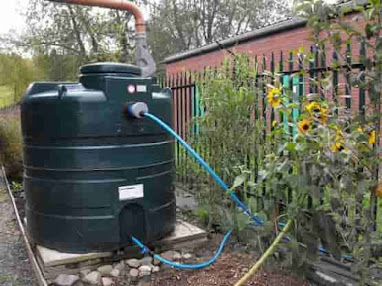
    We can collect rain water in the containers like Watering cans, polyethylene, pots, and children’s swimming pool are some household items, then use the water for washing clothes, watering plants, watering lawns, gardens house plants, washing vehicles and equipment and also cleaning and bathing and save a lot of water. We can install a rain barrel that can collect and store more free water. One tenth of an inch of rain falling on a thousand square feet of roof can fill 65 gallons of water.

    2.         Save Water While Taking a Bath
    How to Save Water

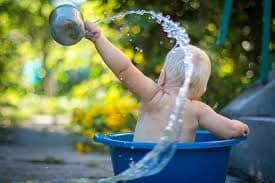
    Normally a person uses up to 30 gallons of water to take a shower. Older showerheads deliver 5 to 7 gallon of water per minute while low-flow showerheads deliver 2.5 gallon. The shorter shower, the greater saving. We can use a bucket to bath that can save water and time.

    3.     To Save Water While Cooking

    How to Save Water

    We use a lot of water to cook food, wash vegetables and fruits. To save water, we can use a bowl to clean the veggies and fruits instead of washing them under the faucet. After washing the veggies or fruits, use the water to watering plants in the garden or potted plants. In this way, we can save up to 4 gallon of water per minute. Sometimes we boil vegetables, pasta or grains and drain the water. But we can reuse the water to boil other food, grains, make soups or make bread and also used the water to watering plants. We can install a motion-sensor faucet that automatically shut off when we pull our hands away which can prevent the water running and we save water. In this way we can save a lot of water every day.

    4.     Reusing Dirty Aquarium Water
    How to Save Water

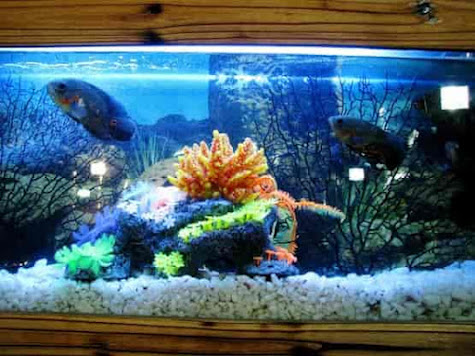
    The aquarium water must be routinely changed because the excess toxic materials and waste dissolved in water are harmful for fish. After refilling the aquarium with water, the dirty water can be used for watering the potted plants and also used in garden because this water contains nitrogen, phosphorous, ammonium, potassium and other microorganisms that can act as natural fertilizers. But don’t use water from saltwater aquarium because it contains salt that is harmful for plants.

    5.  Reuse Unused Drinking Water

    How to Save Water

    Always take a right amount of water in glass but if we can take extra water in glass, instead of throwing of it, we can pour it in a bowl and use it to watering plants and also give our pets to drink. To save water, we can pour the water into the bath basin in the garden or terrace for allowing the birds to bath in and drink.

    6.     Fix Leaks Immediately to Save Water

    How to Save Water

    A minor leak in faucet can waste 3000 gallon of water in a year. After seeing the leaks, immediately call the plumber to fix the leaks to save water. Until the leakage is fixed, put a bucket to catch the dripping water and use the water as you like.

    7.        Save Water While Washing Dishes

    How to Save Water

    Normally a dishwasher use about 4 gallons of water per cycle but hand washing can use up to 20 gallons of water, so to save water, run the dishwasher when it is full. For a light dinner with family or friends, we can use paper cups and plates. After eating, the paper cups and plates are thrown away and no need to wash a huge pile of dishes and we can save a lot of water

    8.                        Saving Water While Washing Clothes

    How to Save Water

    Normally 22% of water is used to do the laundry. According to the U.S Environmental Protection Agency (EPA), a washing machine uses 41 gallons of water per load. Front loading highly efficient washing machine is the best because it uses less 28 gallons of water and can save 6000 gallons of water per year for an average family. Always wash a full load of laundry that can save water, time and more money on water bill. Reuse laundry water to clean the pavements and driveway and also use to wash our vehicles.

    9.     Turn off the Tap to Save Water

    How to Save Water

    To save up to 200 gallons of water, turn off the tap when brushing teeth, saving, washing face or soaping. If we wash our hands nearly 9 times per day and spend 20 seconds for scrubbing our hands then we can save 6 gallons of water per day by turning off the tap while scrubbing our hands.

    10.      Saving Water While Gardening
    How to Save Water

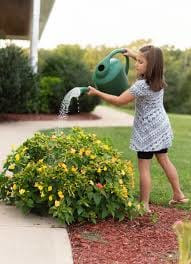
    To save water, always use a watering can instead of a hose because a hose uses around 135 litres of water for every 15 minutes of use. To save water and prevent the water to evaporate, always watering plants early in the morning and late at night. Add a couple inches of mulch in garden beds that not only saves water, also keeps soil temperatures cooler in hot weather, reduces weeds and prevents fungal diseases. All plants need water to live but there are many plants that can live with little quantity of water. These plants we can easily grow in our gardens that also give beauty to our gardens and we save water.

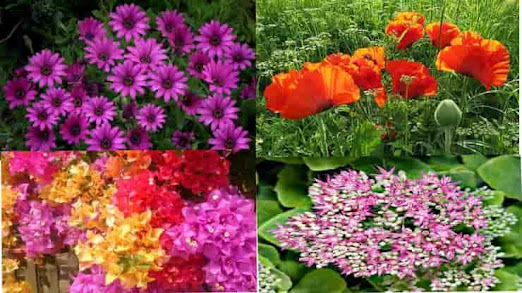
     Here are some best drought tolerant Plants!
    How to Save Water

    ·       Agave

    ·       Poppy

    ·       Rock Daisy

    ·       Jade Plants

    ·       Oleander

    ·       Bougainvillea

    ·       Adenium

    ·       Lithops

    ·       Lantana

    ·       Sedum

    ·       Verbena

    Drought Tolerant Cacti

    How to Save Water

    ·       Bunny ears cactus

    ·       Claret cup cactus

    ·       Blue flame cactus

    ·       Barrel Cactus (Ferocactus)

    ·       Moon cactus

    ·       Christmas cactus

    ·       Old Lady Cactus (Mammillaria haiana)

    ·       Chin cactus

    Water, water, every where, nor only drop to drink” – Samuel Taylor Coleridge.

    Yes, it’s true, 97% of water on the earth is undrinkable because it is saline or salt water. Clean and fresh water is the most precious resources so use the water wisely and be responsible of it. Make a habit of saving water in your every day life. By adopting small practices to reduce water use, we can collectively make a significant impact on our environment and our communities in the long term. To save water we must reduce water wastage, prevent water quality loss and improve water management.
    Causes of Deforestation

    Bulbul


    Causes of Deforestation

    Causes of Deforestation


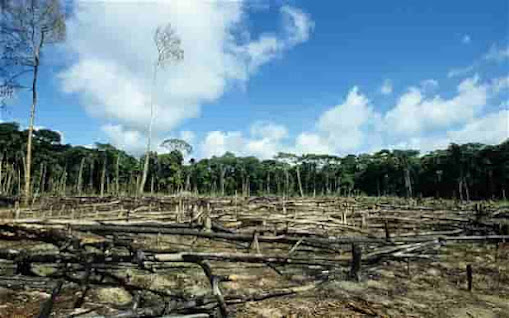
    Deforestation is the process of cutting down or clearing the standing living trees permanently to convert the areas into non-forest uses. Deforestation can be due to human activities or by nature . The forest areas decrease across the world for agricultural land, urbanization, mining activities, timber, construction etc.

    Deforestation affects the biodiversity. Deforestation brings many problems like soil erosion, greenhouse gas emission, climate change, loss of habitat, flooding, water cycle disruption, fewer crops and many more.

    Deforestation can be due to multiple factors, that can be natural or by the human activities. Natural causes include storm, flood, wildfire, parasite-caused diseases etc. but the human’s greed and selfishness are the main causes of global deforestation. Here are some reasons for deforestation:

    Agriculture

    Agriculture causes 80% of deforestation, according to the Food and Agriculture Organization (FAO). Deforestation is most common in topical areas where the farmers used “slash-and-burn farming” cultivation method. In this method, the farmers burn the forest to clean the area and then they grow crops on that area. After few years the soil loses its fertility, then the farmers move to the new areas of the forest and performed the same practices.

    30% of deforestation in Asia and Africa and 70% in Latin America due to industrial agriculture, animal husbandry and large-scale agriculture are the main drivers of deforestation. In Indonesia, palm oil development, intensive agriculture and pulp and paper plantation are the main causes of deforestation. After cattle products, soy is the largest agricultural driver of deforestation.

    Construction


    With the growing of population, the people clear the forest to make their houses, build roads, dams etc. According to World Bank, the world already lost 1.3 million square kilometers of forest which is an area that is larger than South Africa. 10% of deforestation is due to new infrastructures which serve as transportation, transformation and energy generation. In Brazilian Amazon, more than 30,000 miles of new roads through the rain forest had been built in just three years. 7,500 kilometers of new paved highways which is constructed by Brazil, broke the Amazon Basin.

    Livestock

    Livestock ranching is another cause of deforestation. Brazil, a top exporter of beef has lost an area of forest which is as same as of three-quarter of Texas.

    Illegal Logging

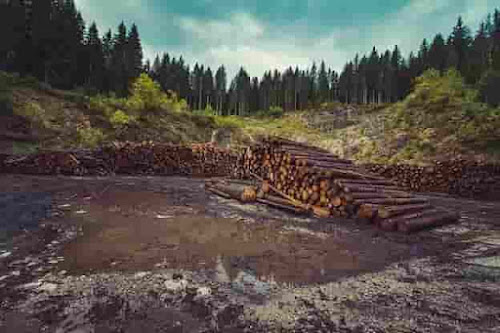
    Illegal harvesting is timber harvesting which is a violation of national regulations. Logging, or cutting down trees in a forest for wood, products or fuel, is a primary driver of deforestation.

    Wood is used to make paper, match sticks, furnitures, etc. The wood-based industries need a huge amount of wood supply so thousands of trees are chopped.

    Firewood

    In some places, especially rural areas people cut the trees to get firewood as fuel. 67% of India’s rural areas still use firewood for cooking. Firewood and charcoal are used for cooking and heating, is still used in many parts of Asia, Africa and Latin America.

    Paper

    Each year about 640 million trees are cutting down to make paper, according to Environment Paper Network. About 10% of deforestation occurs due to the paper and wood products, according to Union of Concerned Scientists

    Mining

    Mining activity is one of the major causes of deforestation. For mines of coal, diamond and gold, many trees are cut down to clear the forests, not only for mining, trucks and equipment, roads are constructed , result deforestation.

    Palm oil

    Palm oil, which a another cause of deforestation, used in many packaged food and beauty products. Due to great demand, the raising prices of palm oil make it more expensive. Indonesian and Malaysian farmers destroy an acre of trees in order to harvest them.

    Lake Natron

    Bulbul


    Lake Natron

    Lake Natrron

    Lake Natron-Tanzania

    Natron Lake, the world's most caustic or alkaline lake. Lake Natron got its name because of its water which is a mixture of sodium bicarbonate, sodium decahydrate (a kind of soda ash) along with a small quantities of sodium chloride sulphate.

    Where is Lake Natron

    Lake Natron is in Arusha region in north Tanzania, Africa, on the Kenyan border. Lake Natron is lying in the Gregory Rift which is within Kenya and northern Tanzania at 36° E Longitude and 2°30’S Latitude.

    Description of Lake Natron

    Lake Natron is a closed alkaline saline lake. The main river feeding the lake is Southern Ewaso Ng’iro River, which originates in Central Kenya. Many minerals rich hot springs also fed this lake.

    Lake Natron is 56 km long, 24 km wide and 9.8 feet deep, streaching between the Kenya-Tanzania border and Ol doinyo Lengai volcano. At the southern edge of the lake has Gelai volcano (9652).

    Lake Natron sends a warning with its bright red colour. Many salt loving microorganisms thrive in its alkaline water. The saline water makes the lake inhospitable for many plants and animals. Spirulina is blue - green algae with red pigments have coloured the lake’s salt crust red or pink. The lake also gets its bright red colour from cyanobacteria which have red pigments. This salt crust changes over time and gives the lake a slightly different appearance each time.

    Lake Natron is in Tanzania’s low elevation semi-arid region, where rainfall is erratic, below 800mm per year with annual variation. Most of the rainfall occurs between December and May, followed by a long dry season.

    At the lake, the daily temperature is above 40°C so the Lake Natron has high evaporation rates. Depending on its precipitation, the lake’s alkalinity can reach directly to the ammonia. When the lake is flooded with water that has heated underground, the temperature of water can be reach 60 degree Celcius.

    The water of Lake Natron is extremely alkaline pH  level is 10.5. In the Rift Valley, the active volcano Ol Doinyo Lengai spews alkali-rich natrocarbonatite lava which flows through runoff from rainwater and nearly hot springs and releases into Lake Natron.  This natrocarbonatite is a mixture of sodium carbonate and sodium bicarbonate which once used in mummification in Egypt. The lava makes its way into Lake Natron and rising its pH level upto 12. Surrounded bedrocks are composed of alkaline. When the water of the Lake Natron evaporates, the natron and trona are left behind which make the water more alkaline.

    Saline and alkaline water, lack of rain, extreme temperature, strong wind, scarcity of vegetation and thick mud surrounding the lake make this place inhospitable.

    Flora and Fauna

    The level of salinity of the water of Lake Natron increases due to lot and quick evaporation. This extreme saline water create the ideal conditions for cyanobacteria development, such as Spirulina spp, which is a single-celled microbes, often referred to as blue-green algae. Cyanobacteria derive their nutrition from a process comparable to photosynthesis of green plants.

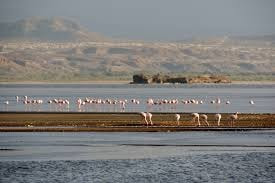
    In July and August, over 2 million lesser flamingos come to Lake Natron shores for reproduction. About 75% of pink lesser flamingos live and breed in mud flats that surrounded  Lake Natron. The lesser flamingos feed on cyanobacteria, blue-green algae and the greater flamingos feed on copepod larva that live on shallow water of Lake Natron. They filter water through their beak to get their food.

    Lake Natron is an ideal nursery of millions of flamingos. Predators avoid this saline lake and hospitable environment so the flamingos live in peacefully. But this lake can be deadly even to them so the flamingos must exercise caution.

    Lake Natron is the home of Natron Tilapia or Tilapia Alcalica. This fish live along the edges of the lake water where the water is less salty. This tropical fish has ability to survive in this saline water.

    Varity of plants can be seen surrounding salt-marshes and fresh water wetlands. A halophytic plants species are also grown here.

    Threats

    Ewaso Ngiro River is the main source of the water of Lake Natron. A hydroelectric power plant scheme proposed by the Kenyan Government is a major threat of lesser flamingos as the lake’s wetland is the secure breeding site of world’s 75% of lesser flamingo birds.

    In 2006, Tata Chemicals Limited and Government of Tanzania planned to develop a soda ash plant on the shore of Lake Natron, which would pump the water from the lake and extract the sodium carbonate from the water. Sodium carbonate is a main material which is used to make glass, detergent, soap etc.  Then sodium carbonate is converted to washing power for export. Not only this, there would be a coal-fired power station to provide energy to the plant, road and rail links also. A senior official at the National Development Corporation (NDC) said that, the building the soda ash factory on the shore of Lake Natron would dry up the lake in about 10 years. Even though Tata Chemical Limited pulled out.

    the Wildlife Conservation Society of Tanzania, the Wildlife Conservation Society of Tanzania , BirdLife International, the Lake Natron Consultative Group and the Royal Society for the Protection of Birds are campaigning worldwide to raise awareness to stop the planned construction of soda ash factories. 

    Lesser flamingos cover the lake between August and October but there are no protections for Lake Natron or its threatened flamingo population.

    Visiting Time

    The weather of Lake Natron is hot, dry and windy. The coolest months are June, July and August as Tanzania is located just south of the equator. Rainy season and dry season are the good times to visit Lake Natron. June to August is the dry season which is the excellent time for walking around the lake, hiking and for trekking up Ol Doinyo Lengai. Lake Natron has enormous potential for tourists, which is important for developing ecotourism. But the lack of a general management plan, inadequate funding and Poorly developed tourism infrastructure facilities were the main challenges associated with ecotourism.

    Lake Natron Myth

    Water of Lake Natron contains sodium bicarbonate and mineral salts which make the lake water extremely hot, alkaline and salty. At the edge of the lake, there are algae, Natron Tilapia and lesser flamingos can survive this extreme environment. But any animals fall into the lake, their skin and eyes quickly burn and after death their carcasses are preserved through calcification, just like mummies. The unlucky animals are calcified and hardening to stone-like structure because sodium carbonate of the lake water hardens the bodies and making them just like stones.

    Photographer Nick Brandit visited Lake Natron and captured a series of photos of the petrified animals that once die in this lake and preserved through calcification. He said that he saw the animals along the shoreline of Lake Natron and did not know how the animals died. He grabbed the dead animals and put them in life-like position as if they were alive and took photographs them. The photograph have become iconic and considered as world’s most phantasmagorical photographs.

    Why is Lake Natron so deadly?

    Lake Natron is one of the most costic or alkaline lakes in the world. The pH level of the water is 10.5 and the temperature of the water is above 40°C, it quickly burn the skin and eyes.

    Why is Lake Natron hot and alkaline?

    Active volcano Ol Doinyo Lengai spews alkali-rich natrocarbonatite which flows and mix with the water of Lake Natron. This natrocarbonatite is a mixture of sodium carbonate and sodium bicarbonate and other mineral salts which increase the Ph level of the water upto 12. When water evaporates, the natron and trona are left behind which makes the water more alkaline

    Lake Natron is fed mineral-rich hot springs which make the water hot (40°C)

    Effects of Deforestation

    Bulbul

    Effects of Deforestation 


    Trees are our true friends. Trees give us oxygen to breathe, food to eat, life-giving medicines, cool shade, timber, fuel and many more. Forests are the homes for many animals as well as many indigenous people who are depending entirely on forests. 


    Effects of Deforestation

    Deforestation

    Deforestation is the removal of trees permanently by cutting down, burning or destroying through intentional, natural or accidental means. About 30% of earth land surface covered with forest but every year 3.5 7 billion trees cut down. Forests are called the lungs of the earth. About 87% of deforestation occurs in tropical rain forest which is an alarming bell for global environment.

    Amazon, Borneo, Congo Basin and the Russian Far East, where the deforestation is most severe.

    Causes of Deforestation


    Effects of Deforestation


    Multiple factors cause deforestation. It can be man-made or natural. Natural causes include storm, flood, wildfire, parasite-caused diseases. But the human’s greed and selfishness are the main causes of global deforestation.

    Human activities such as agricultural expansion, cattle breeding, timber, mining, oil, urbanization, infrastructure development etc.

    Agriculture causes 80% of deforestation, according to the Food and Agriculture Organization (FAO). Deforestation is most common in topical areas where the farmers used “slash-and-burn farming” cultivation method in which the farmers burn the forest to clear the areas for growing crops. After few years the soil losses its fertility and ability to grow crops. Then the farmers move to the new areas of the forest and perform the same practices. 33% of agricultural deforestation is the result of subsistence agriculture.

    About 40% of forests are destroyed for commercial or industrial agriculture. These forest areas are cleared to grow food crops like rice, maize, soybean; fibres like cotton; biofuels like palm oil etc.


    About 7200 square miles of Brazilian rainforests has burned which is as same as in size of New Jersey. In the Amazon, more than 80,000 fires burned as of August 2019, which is an increase of nearly 80% from 2018.

    Between 1990 and 2000, over 10,000 square miles of forests cut down to convert the areas into cropland for soy or grazing for cattle.

    Livestock ranching is another cause of deforestation. About 14% of deforestation occurs due to livestock ranching.  Brazil, a top exporter of beef has lost an area of forest which is as same as the size of three-fourth of Texas.

     Wood is used to make paper, match sticks, furniture etc. The wood-base industries need a huge supply of wood so trees are chopped.

    Mining requires a forest land so trees are destroyed to get the land. About 640 million trees are cutting down to make paper, according to Environment Paper Network.

    With the rapid growth of population, the people clear the forests to make their homes, build roads, dams and other constructions. Infrastructures- transportation, transformation and energy generation, are responsible for 10% to 12% of deforestation.

    Every year due to extreme summer or middle winter thousands of trees are lost due to forest fire. In some places, the people cut the trees to get the fire wood as fuel.

    Deforestation affects the biodiversity. Deforestation brings many problems like soil erosion, greenhouse gas emission, climate change, loss of habitat, flooding, water cycle disruption, fewer crops and many more.

    Effects of Deforestation


    Effects of Deforestation


    Deforestation affects the biodiversity. Deforestation brings many problems like soil erosion, greenhouse gas emission, climate change, loss of habitat, flooding, water cycle disruption, fewer crops and many more.

    Soil Erosion and Flooding


    The roots of the trees bind the soil and prevent it to wash away. Topsoil is fertile and contains high organic matter. When the forests are cut down, the raindrops fall directly on the bare soil surface and can break down soil aggregates. The lighter aggregate materials are easily washed away. Due to soil erosion, the soil loss its fertility, result fewer crops or the land turns into fallow land and leads to downstream flooding.

    The fine soil particles are carried by strong wind which fill the river beds and shrink the channels. The rivers cannot handle the load of water to carry and become overflow, result flood. The huge Yangtze River flood of 1998 was occurred due to the deforestation.  Trees can reduce the speed of the wind and protect the soil from being blown away by the wind. So deforestation is one of the main causes of soil erosion and flooding. Tree roots provide a mechanical stabilization in slopes which prevent the land slopping. Flood and mudslides devastate homes and communities.

    Habitat loss


    Effects of Deforestation


    31% of earth surface is covered with forests which is the home of 80% of world’s known animals and plants. These forests give shelter, food, water, protection and breeding habitat to the animals that live in the forests. Tropical forest is the home of about half of all the earth’s animal species.

     Amazon rain forest is the home of 40,000 plant species, 3000 freshwater fish species and more than 370 types of reptiles.

     Forests are the homes of 250 million people worldwide and 1.6 billion people are depended on the forests for their livelihood. Froests are the homes of about 60 million tribal and indigenous  people who are totally dependent on forests for their livelihood and income.

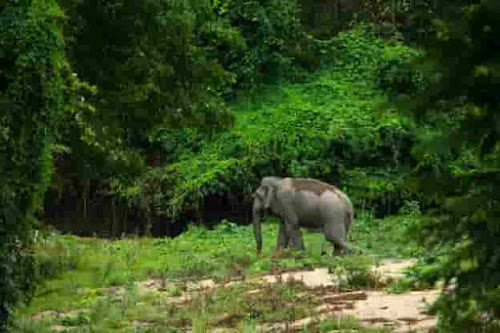
    Forest areas are decreases due to deforestation so the animals do not get sufficient food and water, breeding habitat, shelter. Deforestation pushes them towards extinction. Due to deforestation, many animals that live in the forest become endangered like orangutans, giant pandas, rhinos and the Asian elephants are some of endangered species. A recent study of the Brazilian Amazon predicts that, in the next 40 years, 90% of animals will be extinct.

    Trees protect the forest areas from the scorching heat of the sun like a huge umbrella. But lack of trees do not able to block the sun’s ray during the day time and retains heat at night, which increase the temperature that can be harmful for plants and animals.

    Due to deforestation, about 28,000 animal species will become extinct by the next quarter of the century.


    Greenhouse gas emission and global warming


    Effects of Deforestation


    In the day time, the trees absorb carbon dioxide from the air and release oxygen into the air during photosynthesis. At night, the trees breathe out a small quantity of carbon dioxide during respiration. The extra carbon dioxide is stored into the trees as carbon. When the trees burn, the stored carbon dioxide get released into the air again. deforestation is one of the causes of increasing the carbon dioxide in the environment. Carbon dioxide is a greenhouse gas, which trap the heat of the sun and prevent the heat from the earth to radiate back into the space, result raising the atmospheric temperature. Increasing of earth’s average temperature is called globalwarming.

    A number of serious consequences happen due to global warming such as melting glaciers, rise of sea-level, climate change, infectious diseases, flooding, drought, hot waves, sever precipitation like hurricanes, wildfires, pollution  and many more. Global warming can destroy the habitat of many flora and fauna and may lead to extinction of many species.

    Deforestation is responsible of 25% of the total greenhouse gas production.

    Climate Change

    Deforestation is the second main cause of climate change. The trees play an important role to control global warming by utilizes the greenhouse gases. Due to deforestation, the level of carbon dioxide is increasing in the atmosphere dramatically which is one of the greenhouse gases that trap the sun’s heat and increases the temperature of earth, as a result climate change progress.

    Climate change is having serious impact on environment. Climate change affect the weather phenomena, droughts, flood, forest fire, death or extinction of many species of flora and fauna, hurricanes, hot waves, Arctic likely to become ice-free, in one word climate change affects the whole ecosystem.

    Water Cycle

    The forest especially rainforests store a huge quantity of water. The trees and other vegetation play an important role in the water cycle. The trees and plants absorb the underground water and evaporate the water into the atmosphere. When the trees are destroyed or deforested, the rainfall is reduced and the water cycle is interrupted, which leads to much drier climate, drier soil and inability to grow crops. Gradually, the areas become barren desert. Water cycle, due to deforestation, affects the ecosystem, economies and our daily lives.

    Three-fourth of earth’s fresh water comes from forested watershed, according to 2018 report. Over half the global population depends on this water for drinking and using this water for agriculture and industries or other uses. So less of trees affect the water quality.

    Nutrient Cycle

    Deforestation affect the nutrient cycle. About 80% of the nutrients in the rain forest come from trees and plants, which leaves 20% nutrients in the soil. These nutrients recycled back into the plants and trees. But deforestation changes this condition quickly. Dried soil, soil erosion occurs which make the soil infertile. Soil becomes infertile when clear the forested areas by grazing.


    Effects on Human Health

    The shady forests prevent the sunlight to enter the forest floor, but the lack of trees due to deforestation increases the temperature which can aid mosquitoes breeding. Plasmodium parasite transmitted by mosquitoes which is the cause of malaria and every year over one million people die due to malaria.

    Water Pollution

     For mining activities, forested areas are cleared by deforested the trees. Gold mining activities in the forested areas lead to water pollution. To separate gold from the ground, mercury is used which washed away into the rivers or nearby water bodies and polluted the water. The aquatic animals die and the people who live nearby the areas also affected by this poisonous chemical.

    30% of emerging diseases occur due to deforestation, according to the World Economy Forum. Deforestation brings worrisome life-threatening diseases, such as malaria, dengue, yellow fever etc.

    Burning of trees increase the carbon dioxide into the air, which is harmful for human health. Deforestation creates the conditions for deadly pathogens to spread to people i.e. Nipah and Lassa viruses.


    Effects of Deforestation


    Trees protect our environment in several ways. According to World Wildlife Fund, 30% of the earth’s land surface covers with forests. These forests provide food and fuel to one billion people; jobs in the forest sectors to 13.4 million people and also provide jobs related to forest to 41 million people. Deforestation is leading the earth to destruction. Planting more trees can save our earth. The action must be taken to stop deforestation and have to try to repair the previous damage that has been caused for more than hundred years.

     Increase public awareness and influence people by educating them about the causes and effects of deforestation.